
About
The Faculty of Civil Engineering at the Budapest University of Technology and Economics (BME) will organize the DigiTwin Conference again in 2026, with a continued focus on the application of artificial intelligence, efficiency, and sustainability. Our Faculty is strongly committed to advancing efficiency, digitalization, and sustainability in the construction industry. These priorities guide the development of our academic programs and research activities. We actively seek collaboration with companies that share these goals, aiming to foster knowledge exchange and cooperation. In 2023, we joined the Digital Twin program, and we are participating in the international joint degree master's program Digital Twins for Infrastructures and Cities, as well as in the establishment of a European Center of Excellence in Digitalization of Infrastructures and Cities (EUCEDIC).
Today, the construction industry is seeking ways to operate more efficiently, sustainably, and through advanced digital solutions. The DigiTwin Conference responds to this challenge by creating a professional forum where industry and academia can jointly explore the practical applications of artificial intelligence, digitalization, and emerging engineering solutions. The 2026 conference opens towards the entire construction sector and aims to foster real-world insights, new professional connections, and future collaborations. Participants will gain not only inspiration but also directly applicable examples and development directions.
Structure of the program
The first part of the conference begins with brief welcome remarks, followed by an industry overview of current challenges and development trends. This is complemented by presentations from both academic and industry speakers, addressing topics such as:
- digitalization and sustainability in education
- application strategies of artificial intelligence
- key trends shaping the future of the industry
Interactive session: World Café
The second part of the program features an interactive workshop based on the World Café methodology. The World Café is a structured yet informal discussion format designed to facilitate collective thinking and knowledge sharing. Participants work in small groups at thematic "tables," where they discuss specific questions or challenges.
Participation and support
Participation in the event is free of charge.
Conference Summary
DigiTwin 2026 Conference at the Faculty of Civil Engineering, BME
In 2026, the Faculty of Civil Engineering at Budapest University of Technology and Economics (BME) once again hosted the DigiTwin Conference, focusing on artificial intelligence, digitalization, efficiency improvement, and sustainability. The event aimed to create a common forum for professionals from the architecture, engineering, and construction (AEC) industry, researchers, and educators, providing an opportunity to explore the latest trends, practical experiences, and future development opportunities.

The State of the Industry and Opportunities for Development
Following the Dean's welcome and the organizers' opening remarks, the professional program began with a keynote presentation by László Koji, President of ÉVOSZ (National Federation of Hungarian Building Contractors). He provided a comprehensive overview of the current state of the Hungarian construction industry, its challenges, and its opportunities for growth. His presentation highlighted the economic and technological changes affecting the sector, emphasizing the importance of innovation and collaboration in addressing these challenges.

Renewing Civil Engineering Education
Tamás Lovas, Associate Professor at the Faculty of Civil Engineering, BME, presented how the faculty's educational portfolio is evolving to meet the demands of a rapidly changing professional environment. He outlined recent developments in undergraduate, graduate, and lifelong learning programs, as well as the faculty's internationalization efforts.
Special attention was given to the successful international master's program Digital Twins for Infrastructure and Cities, which offers a joint degree and is currently open for applications, including newly introduced shorter standalone modules. The audience also learned about the Renewable Energy and Sustainable Construction ERASMUS+ master's program, launching this autumn and offering multiple degrees through international cooperation. The presentation demonstrated how digitalization, sustainability, and international collaboration are becoming increasingly important in educating the next generation of engineers.

Artificial Intelligence in Construction Practice
Representing CÉH Plc., Zsolt Oláh presented the company's artificial intelligence strategy and shared practical recommendations for organizations seeking to begin their AI adoption journey.
One of the key messages of his presentation was:
"The risk is not trying AI. The real risk is not trying it."
Through concrete examples, participants gained insight into how AI can support design processes, documentation workflows, and decision-making activities within the construction industry.

Interactive Learning Tools Powered by Claude
One of the conference's most practice-oriented presentations was delivered by Balázs Móczár, who introduced a series of interactive learning tools developed using Claude AI, as well as a Foundation Engineering Chatbot built with NotebookLM and based on verified and controlled knowledge sources.
The presentation reviewed the development history of several educational tools, including modules on Soil Investigation, Bearing Capacity Calculation of Shallow Foundations, and Settlement Analysis of Shallow Foundations. It also discussed the methodologies applied during development and the experiences gained in supporting students.
The demonstration clearly illustrated how generative AI can be effectively integrated into higher education, from introductory learning activities to professional engineering applications, including practical support for interpreting and applying standards such as Eurocode 7.

Collaborative Thinking Through the World Café
The second half of the conference featured a World Café workshop session. Through thematic discussions in small groups, participants from industry and academia jointly explored ideas and recommendations related to AI adoption, digital transformation, and the sustainable development of the construction sector.
The workshop generated valuable practical insights, new professional connections, and potential collaborations that are expected to further strengthen the relationship between academia and industry beyond the conference itself.
World Café Topics
- Vibe Coding: How can AI be used in real engineering work? (Zsolt Oláh)

- Improving Construction Project Efficiency: Digital solutions for addressing challenges related to time, cost, productivity, and knowledge management. (Judit Csanaky, Balázs Nagy)

- AI for Reliable Efficiency: How can AI be applied effectively in everyday professional practice? (Árpád Barsi, Kristóf Kapitány)

- Business Development in a Digital Environment: How can digitalization create competitive advantages for construction companies? (Gábor Dehelán, Attila Joó)

- Construction Sustainability: How should organizations prepare for emerging sustainability requirements in construction and engineering activities? (Zsuzsa Szalay)

Presentation Materials
With the presenters' permission, the conference organizers are making the presentation slides available to participants, ensuring that the knowledge, examples, and good practices shared during the event remain accessible for future reference.
Available presentations include:
- László Koji (ÉVOSZ President)
Construction Industry Outlook: What Can We Do Together to Develop the Sector? - Zsolt Oláh (Chief Innovation Officer, CÉH Plc.)
What Is the Right Strategy for AI Adoption? Bringing Order Above the Chaos in Construction - Tamás Lovas (Faculty of Civil
Engineering, BME)
Teaching AI, Digitalization, and Sustainability for the Development of the Construction Industry
Looking Forward
The conference clearly demonstrated that the Hungarian AEC industry recognizes the need for transformation. The adoption of artificial intelligence and digital technologies is no longer viewed as a distant possibility but as a strategic direction that is actively being explored by companies, professionals, and educational institutions alike.
The conference showcased numerous good practices, proven solutions, and real-world experiences. At the same time, its purpose extended beyond knowledge sharing. The World Café format was intentionally included to spark conversations, initiate dialogue across the sector, and actively involve all stakeholders in shaping the future of the industry.
Perhaps the most important message of the conference was that the future will not be built by a single technology, company, or institution. Meaningful progress depends on collaboration. Universities, designers, contractors, technology developers, and professional organizations each bring unique strengths, expertise, and perspectives. By bringing these together around the same table, we can create a more competitive, sustainable, and innovative construction industry and build a better future for the generations to come.

Presentations:
- László Koji (ÉVOSZ President): Construction Industry Outlook: What Can We Do Together to Develop the Sector?
- Zsolt Oláh (Chief Innovation Officer, CÉH Plc.): What Is the Right Strategy for AI Adoption? Bringing Order Above the Chaos in Construction
- Tamás Lovas (Faculty of Civil Engineering, BME): Teaching AI, Digitalization, and Sustainability for the Development of the Construction Industry
Conference Programme

Download the shareable Artificial Intelligence and Human Knowledge in the Construction Industry – What's Next? Conference 2026 detailed programme:
here
.png)





Venue
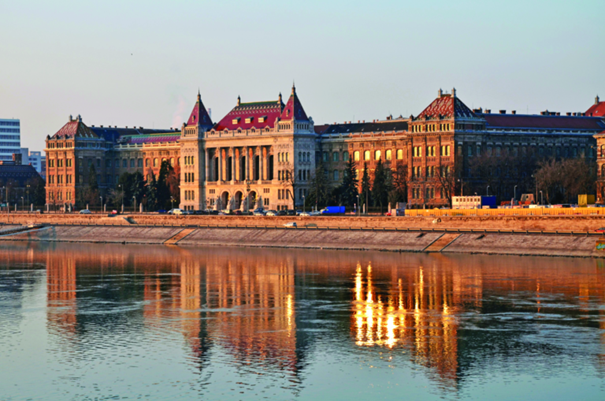
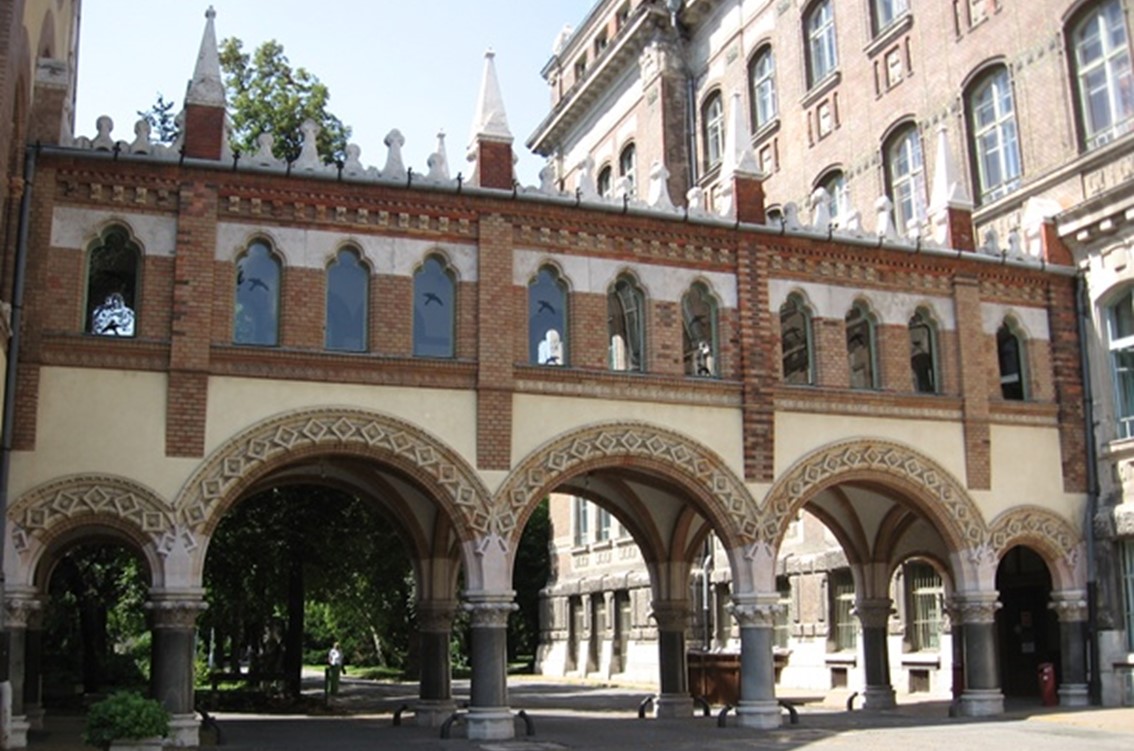
Artificial Intelligence and Human Knowledge in the Construction Industry – What's Next? Conference 2026 takes place in Budapest, capital of Hungary at the Faculty of Civil Engineering, Budapest University of Technology and Economics, which is the largest institute providing civil engineering university education in Hungary. Keeping with the tradition of excellence, today's graduates exhibit a high quality of engineering craftsmanship and skills

More information: xplore.bme.hu
Registration
Local Organizing Committee
| Name | Institution | Country |
|---|---|---|
| Tamás Lovas | Budapest University of Technology and Economics | Hungary |
| Kristóf Kapitány | Budapest University of Technology and Economics | Hungary |
| David Sik | Budapest University of Technology and Economics | Hungary |





Contact
Location:
Faculty of Civil Engineering
Budapest University of Technology and Economics
Muegyetem rkp. 3.
Budapest, Hungary